
Cross-Border Website Design for Architectural Studios | Boost Conversions
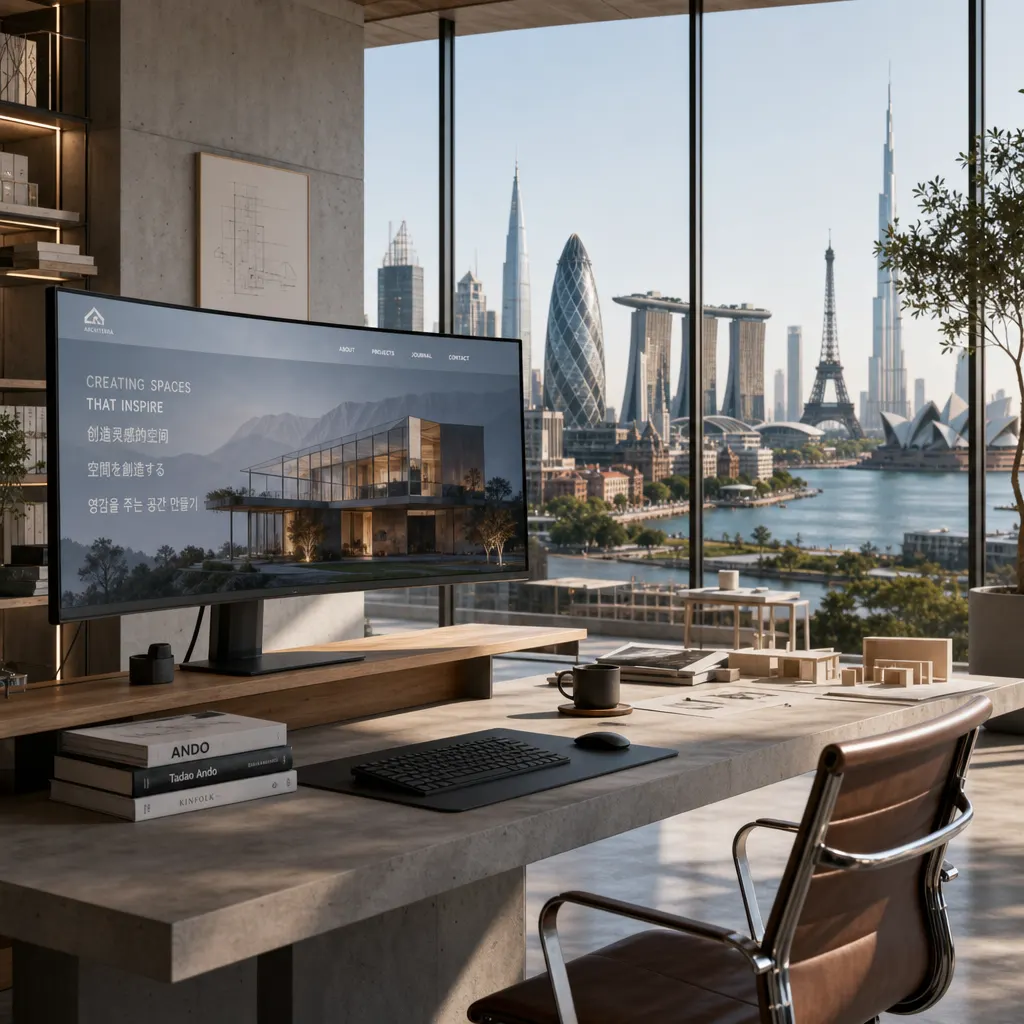
How to Build a Conversion-Ready Cross-Border Website for Architectural Studios
In today's globalized design landscape, architectural studios are no longer confined by geography. Whether you're a boutique firm in Barcelona targeting clients in the Middle East or a Tokyo-based practice seeking projects in Europe, your website is your most powerful business development tool. But building a cross-border website that actually converts international visitors into paying clients requires a strategic approach that goes far beyond simple translation.
Why Cross-Border Matters for Architecture Firms
The global architecture market is projected to reach $414 billion by 2027. International clients are actively searching online for studios that can deliver world-class design, regardless of location. However, most architectural websites fail to capture this opportunity because they're built for a single market.
A conversion-ready cross-border website bridges cultural, linguistic, and trust gaps — turning your portfolio into a global client acquisition engine.
1. Establish a Multilingual Strategy That Goes Beyond Translation
Simply running your website through Google Translate won't cut it. International clients can immediately sense low-quality translations, and it erodes trust — the foundation of any architectural commission.
- Prioritize target markets: Identify 2-3 key regions where you want to win projects and invest in professional localization for those languages.
- Use native-speaking copywriters: Architecture has specialized terminology. Ensure your copy resonates with local industry professionals.
- Implement hreflang tags: This tells search engines which language version to serve to which audience, boosting your international SEO.
- Localize units and formats: Switch between metric and imperial measurements, date formats, and currency where relevant.
2. Design a Portfolio That Speaks Universally
Your portfolio is the heartbeat of your architectural website. For cross-border conversion, it needs to communicate quality and expertise without relying heavily on text.
- Invest in high-resolution photography: Professional architectural photography transcends language barriers.
- Use video walkthroughs and 3D renders: These create immersive experiences that keep international visitors engaged longer.
- Categorize projects by typology and region: Allow visitors to filter by project type (residential, commercial, hospitality) and geographic location.
- Include project metrics: Square footage, budget ranges, and timelines provide concrete data that builds credibility across cultures.
3. Build Trust Signals for International Audiences
Trust is the single biggest barrier in cross-border conversions. An international client is taking a perceived risk by hiring a studio from another country. Your website must systematically eliminate that risk.
Essential Trust Elements
- International certifications and memberships: Display RIBA, AIA, or regional equivalents prominently.
- Client testimonials from diverse regions: Showcase reviews from clients in different countries.
- Case studies with measurable outcomes: Go beyond pretty pictures — show how your design solved real problems.
- Press and awards: International media features and design awards carry significant weight.
- Clear team bios with language capabilities: Let visitors know your team can communicate in their language.
4. Optimize for International SEO
Ranking in multiple countries requires a deliberate technical and content strategy.
- Choose the right URL structure: Use subdirectories (e.g., /en/, /ar/, /ja/) for multilingual content — they're easier to manage and pass domain authority.
- Target location-specific keywords: Research what potential clients in each market actually search for. "Architect firm Dubai" differs from "architecture studio London."
- Create region-specific landing pages: Develop dedicated pages for each target market highlighting relevant projects, local expertise, and regulatory knowledge.
- Build backlinks from international design publications: Guest posts and features on ArchDaily, Dezeen, and regional platforms boost authority.
5. Streamline the Conversion Path
Every page on your website should guide visitors toward a clear action. For architectural studios, this typically means booking a consultation or requesting a proposal.
- Add CTAs to every portfolio page: "Interested in a similar project? Let's talk" is more effective than a generic contact page.
- Offer multiple contact methods: Some cultures prefer email, others WhatsApp or WeChat. Adapt accordingly.
- Include a timezone-friendly booking system: Tools like Calendly with automatic timezone detection remove friction for international leads.
- Create a project inquiry form: Ask about project type, location, budget range, and timeline to qualify leads efficiently.
- Implement live chat with multilingual support: Even a chatbot that handles initial queries in multiple languages can dramatically increase conversions.
6. Technical Performance for Global Audiences
A slow website kills conversions everywhere, but especially for cross-border visitors who may be accessing your site from regions with varying internet speeds.
- Use a CDN (Content Delivery Network): Serve your site from servers closest to your target audiences.
- Optimize images aggressively: Use WebP format and lazy loading for your portfolio images.
- Ensure mobile-first design: In many international markets, mobile traffic exceeds 70%.
- Target Core Web Vitals scores: Aim for LCP under 2.5 seconds and CLS under 0.1.
Frequently Asked Questions
How many languages should my architectural studio's website support?
Start with English as your base language, then add 1-2 languages based on your target markets. Quality localization in fewer languages is far more effective than poor translations in many languages.
What's the most important element for converting international architecture clients?
Trust signals — including international certifications, testimonials from global clients, and detailed case studies — are the most critical elements. International clients need reassurance that you can deliver across borders.
How long does it take to build a cross-border architectural website?
A comprehensive, conversion-optimized multilingual website typically takes 8-16 weeks to plan, design, develop, and launch. This includes professional localization, SEO setup, and performance optimization.
Should I use a subdomain or subdirectory for multilingual content?
Subdirectories (yoursite.com/fr/) are generally recommended because they consolidate domain authority and are easier to manage. Subdomains can work but require more SEO effort to build authority independently.
How can I measure if my cross-border website is converting effectively?
Track key metrics including conversion rate by country, inquiry quality scores, bounce rate by language version, and cost per lead by region. Use Google Analytics 4 with geographic segmentation to identify which markets are performing best.